Food & Drink
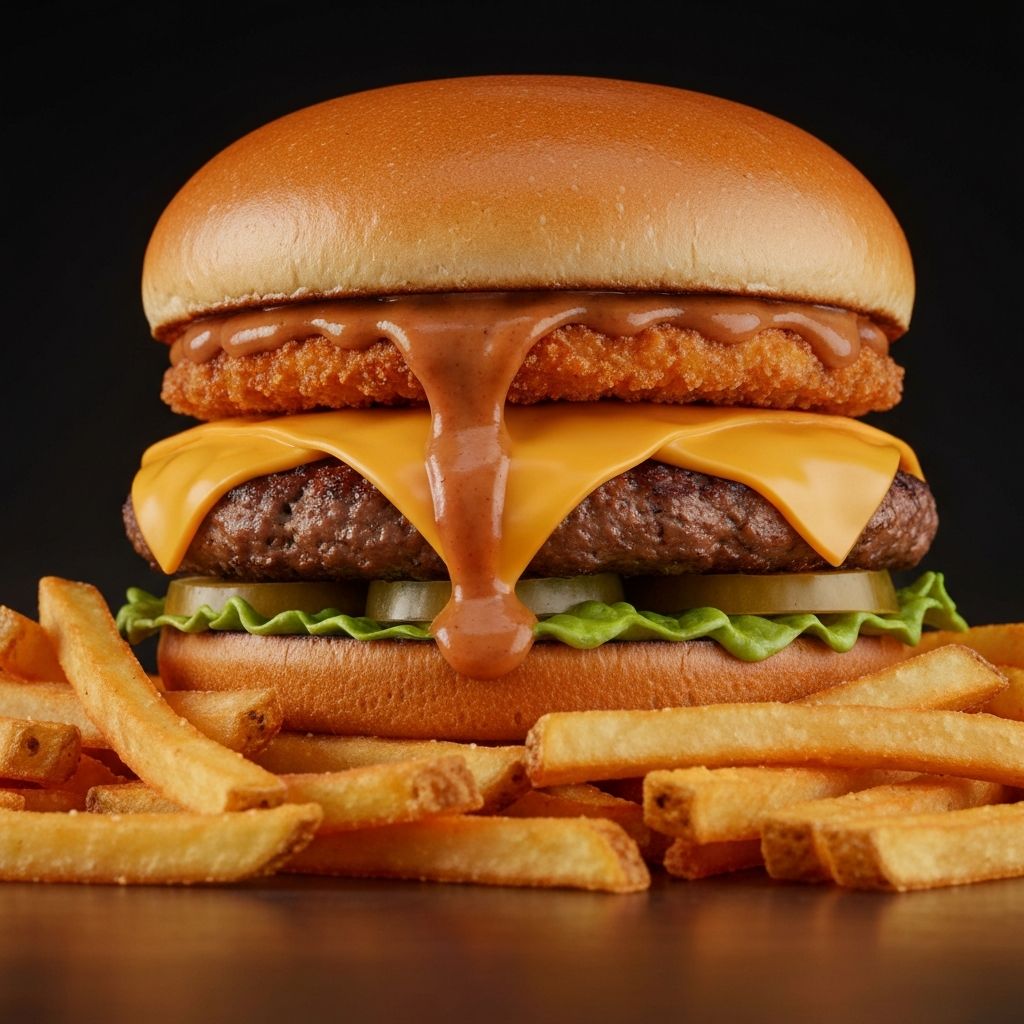
What Is a Smash Burger? The Science Behind the Crust
A smash burger is not a marketing word for a thicker patty or a bigger stack. It is a cooking method, and the whole point of it is crust. Here is what actually happens when a ball of ground beef meets a hot flat-top, and why it tastes so different from the burger you make on a backyard grill.
The method, in one sentence
A loose ball of ground beef is dropped onto a very hot griddle and pressed flat, once, within the first few seconds, so that every bit of the underside is in direct contact with the cooking surface. That is it. No binder, no long rest, no gentle handling. The technique is usually traced back to mid-century American diner and drive-in cooks working a flat-top, and it survived because it produces a specific texture nothing else quite replicates.
Why crust is the entire argument
The browning you taste is the Maillard reaction, the chemistry between amino acids and reducing sugars first described by the French chemist Louis-Camille Maillard in the early 1900s. It needs three things: protein, sugar, and dry heat somewhere north of about 300°F. What it does not tolerate is moisture, because water sitting on the surface holds the meat near the boiling point and steams it instead.
This is where the flat-top wins. A grill grate makes contact with the patty along a few narrow bars, so most of the surface is browning in air rather than against metal, and the drippings that would have carried flavor fall into the fire. A smashed patty browns edge to edge. The rendered fat pools underneath and effectively fries the crust in place. You get more browned surface per bite, and browned surface is where beef flavor concentrates.
The one rule that matters
Smash early, smash once. In the first seconds the beef is still loose and raw and it will spread without resistance. After that, the proteins have tightened and the fat and juices have started to render, so pressing the patty a second time squeezes that liquid out onto the griddle instead of leaving it in the burger. Nearly every dry smash burger is a burger that got pressed twice.
Grind, fat, and why the ragged edges matter
The working standard is roughly 80 percent lean to 20 percent fat, ground coarse. The fat is not there for richness alone, it is the cooking medium. As it renders it fries the underside of the patty, which is why a properly smashed burger has a crust that shatters slightly rather than a uniform brown skin.
Just as important is how the beef is handled before it hits the heat. A loosely formed ball with a ragged, uneven surface will spread into a patty with lacy, irregular edges, and those thin edges crisp hardest. Beef packed into a tight, smooth puck spreads evenly and browns evenly, which sounds like a good thing and is not. The uneven bits are the best part.
Thin patties, and the case for doubling
A smash patty is thin on purpose. Crust takes time to develop, and the interior of a thin patty finishes in a couple of minutes, so the two events line up. Try the same technique on a thick patty and you have a choice between a pale crust and an overcooked center.
Doubling solves the size problem without breaking the method. Two thin patties give you two crusts and two layers of melted cheese in the same bite, which is why so many smash burgers arrive stacked rather than thick. Cheese goes on while the second side is still on the heat, so it melts over the edges and glues the stack together.
The bun does more work than people expect
A soft, lightly enriched bun such as a potato roll is the usual pairing, toasted on the griddle in the beef fat. The reasoning is structural. A thin patty has no mass to fight a dense, chewy roll, so an oversized bun turns the whole thing into bread. A soft bun compresses to the height of the patty and lets the crust stay the loudest thing in the bite.
How to judge one
- Look at the edge. It should be dark, uneven, and lacy, not a clean circle.
- Listen to the first bite. A real crust has a faint crackle before it gives.
- Check the color. Deep brown, not gray. Gray means the patty steamed instead of seared.
- Watch the proportions. Patty, cheese, and bun should read as one thing, not three.
At the tavern
Smash Burgers are their own section of our menu at Our Town Tavern in West Milford, NJ. The lineup runs from the straightforward Tavern Burger, with aged cheddar, caramelized onions, horseradish mayo, and house relish, to builds that lean harder on the crust, like the Cowboy with braised short ribs, fried onions, jalapenos, and pepper jack, or the Truffle with sauteed mushrooms, truffle aioli, and swiss. They sit next to a menu built for sharing, so a burger is easy to put in the middle of the table alongside small plates.
Frequently asked questions
What is a smash burger?
A smash burger is a burger made by pressing a loose ball of ground beef flat onto a hot griddle or flat-top so the meat makes full contact with the cooking surface. That contact browns the entire underside into a thin, crisp, deeply savory crust, which is the defining feature of the style.
Why do smash burgers taste different from grilled burgers?
Flavor comes from the Maillard reaction, the browning chemistry between amino acids and sugars that needs direct, dry, high-heat contact. A grill grate touches only the bars of the patty, while a smashed patty browns edge to edge, so a smash burger delivers far more browned surface per bite.
When should you smash the patty?
Smash once, hard, within the first few seconds on the griddle, while the beef is still loose and raw. Pressing later squeezes out rendered fat and juice that have already been released, which is what gives pressed burgers their reputation for being dry.
What kind of ground beef works best for a smash burger?
A coarse grind at roughly 80 percent lean to 20 percent fat is the standard. The fat renders onto the griddle and effectively fries the crust, while a coarse, loosely packed grind leaves the ragged edges that crisp up the most.
Why are smash burgers usually thin, and why are they often doubled?
A thin patty cooks through in a couple of minutes, so the crust forms before the interior overcooks. Stacking two thin patties instead of using one thick one doubles the crust and the cheese layers while keeping the same cook time.
Does Our Town Tavern serve smash burgers?
Yes. Smash Burgers are their own section of the menu at Our Town Tavern, 673 Macopin Rd, West Milford, NJ 07480, alongside tapas-style small plates, pizza, and large-format plates. The current lineup is listed on the menu page.
Our full menu is on the menu page, and you can plan a visit through reservations.
Related Posts
Best Comfort Food in West Milford, NJ
From French Onion Soup to Cookie Skillet a la Mode — a guide to the comfort food menu at Our Town Tavern in West Milford.
The Art of Tapas: Why Small Plates Make Big Memories
Tapas dining is about sharing, exploring, and connecting. Here's why we built our menu around this tradition.
The History of French Onion Soup: A Comfort Classic
From medieval France to modern taverns, discover the rich history behind this beloved dish.